


August 27, 2026 — Interest of Justice
Adam Mosseri, the head of Instagram, began his testimony in an Oakland federal courtroom late Tuesday afternoon. Mark Zuckerberg was on the witness list directly behind him.
He never made it to the stand to testify…
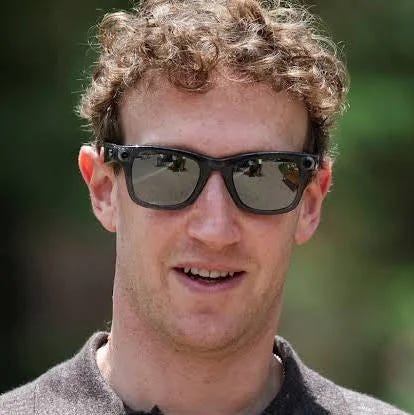
On Wednesday, August 26, Meta Platforms agreed to pay $17.1 billion and the trial ended — eight days into a proceeding that had been calendared for six weeks. Georgia Attorney General Chris Carr announced the agreement as the largest state consumer protection settlement in American history outside the Big Tobacco settlements of the 1990s, and on the raw numbers he is correct. U.S. District Judge Yvonne Gonzalez Rogers, who presided over the trial in the Northern District of California, called it “a good step forward” and indicated she expected to approve it.
Every outlet in the country ran the dollar figure yesterday. Almost none of them explained what Meta actually bought with it, so let’s talk about that.
What was on the table when the money moved
The case was brought in 2023 by a coalition of state attorneys general and resolves claims by 47 states, the District of Columbia, Puerto Rico, American Samoa, and the Northern Mariana Islands. The allegation was that Meta engineered Instagram with features designed to addict children, documented the resulting mental health damage in its own internal materials, and failed to warn parents about any of it. The agreement also disposes of the states’ claims arising from Meta’s disclosure of nonpublic Facebook user information to third parties such as Cambridge Analytica in the run-up to the 2016 election. Nearly every attorney general in the country had been investigating the industry since 2021 to get to that courtroom.
Meta admitted no wrongdoing. Under American preclusion doctrine it is precisely what the money bought.
The mechanism the coverage isn’t explaining - what a settlement actually kills
Start with how this normally works. A court hears the evidence, decides a disputed fact, and that decision follows the losing side into the next lawsuit. Someone who had nothing to do with the first case can walk in later, point at what was already decided, and skip proving it a second time. That is the reason a trial matters to people who were never in the room.
None of that happened here.
A mother in Ohio who files next spring over what Instagram did to her daughter gets nothing out of Wednesday. No finding that the platform was built to hold a child’s attention past the point of harm. No finding that Meta measured the damage in its own research and told parents nothing. She starts where the attorneys general started in 2021, pays for the discovery herself, and proves the whole case again against the same defense firms.
The rule behind that is old and it is strict. The Supreme Court laid out the modern version in Parklane Hosiery Co. v. Shore, 439 U.S. 322 (1979), allowing a new plaintiff to use a finding made against a defendant who already had a full chance to fight it. The fact has to have been ACTUALLY LITIGATED and ACTUALLY DECIDED. Restatement (Second) of Judgments § 27, comment e, covers what happens when a case ends before that point — a judgment entered by settlement decides nothing, so it binds nobody on anything. Wright and Miller say the same in Federal Practice and Procedure § 4443, the treatise courts reach for on this question. A settlement stops that plaintiff from filing that claim again. It proves nothing to anyone else.
Meta had internal research going into evidence. The head of Instagram was under oath in front of a federal judge. Zuckerberg was next. On day eight of a six-week trial it all stopped, and none of it will ever be a finding.
What Meta agreed to, and how long it lasts
The safety measures are real and they go further than any court has ordered before.
Two-hour daily limit for children across Instagram and Facebook combined, with forced breaks at 15, 60, and 90 minutes — 5 years
Access blocked from midnight to 6 a.m. — no end date stated
Push notifications off on weekdays, 8 a.m. to 3 p.m., during the school year — no end date stated
Stronger parental controls — no end date stated
Limits on beauty filters and visible like counts — no end date stated
Age verification — no end date stated
Independent auditor reviewing compliance — no end date stated
One rule has a clock on it, and it’s the one that keeps children off the app. Fewer hours means fewer ads, and that limit comes off in 2031. The requirement that Meta establish who you are costs the company nothing, and no end date was attached to it.
THE GLOBALIST AGENDA TO CONTROL THE INTERNET MOVES FORWARD? LOOKS LIKE IT!
Meta bought the record and got the ID mandate it was already lobbying for
Age verification is not something Meta had to be dragged into. It is something the company has been paying lobbyists to obtain.
Bloomberg reported in July 2025 that Meta and Google lobbyists were fighting in statehouses over who would carry the burden of checking ages. Meta’s preferred version puts the check at the operating system, so Apple and Google build the identity apparatus and Meta receives verified users without doing the work or holding the liability. Meta, Snap, X, and Pinterest back that model. Apple and Google oppose it. Every company supporting it runs a social platform. Every company fighting it runs an app store. Meta made the same request of the Canadian government in November 2025. Utah, Texas, and Louisiana have enacted versions, and Utah’s App Store Accountability Act takes effect May 6, 2026.
The constitutional question was answered fourteen months ago. In Free Speech Coalition, Inc. v. Paxton, decided June 27, 2025, the Supreme Court upheld Texas House Bill 1181 by a vote of six to three. That statute requires verification through government identification, biometric data, or the equivalent. The majority called the burden on adults incidental and applied intermediate scrutiny. Justice Kagan, dissenting, named the cost plainly — an adult who wants to reach lawful material has to surrender an identity document or submit to a face scan to get there.
So the order of events is this. Meta lobbies for age verification. The Supreme Court clears the constitutional obstacle. Forty-seven attorneys general then impose age assurance on Meta by private agreement, with no bill, no floor vote, no hearing, and no court finding that Meta did anything wrong.
Draw your own conclusions about which side lost that exchange.
AGENDA 2030 DRAWS NEARER FOLKS!
They settled from behind
Meta did not walk into Oakland from strength. It had already lost two child safety trials this year. A New Mexico jury found the company violated that state’s consumer protection law. A California jury held Meta and Google liable over the mental distress of teenage users. Its own executive was testifying and its chief executive was hours from the stand.
If the design was safe and the disclosures to parents were honest, you put your chief executive in that chair and let him say it under oath. Meta had that option Wednesday morning and paid $17.1 billion instead. Georgia alone collects close to $100 million and could receive nearly $135 million.
We recognize the maneuver because we run into it constantly. Institutions with real exposure do not beat you on the merits. They go around the merits — settlement, mootness, administrative closure, or delay long enough that the question stops mattering. It is why a Citizens Petition sits past its statutory deadline with no answer. It is why a FOIA office would rather close a request than fill it. No record forms, no finding issues, and whoever comes next inherits nothing she can use.
Procedure is the weapon. It always was. And a payment that erases the record is not a punishment for a company earning what Meta earns. It is a budgeted expense, and one the company can pay again in 2031 when these obligations run out.
Seventeen billion dollars, and they still would not put Mark Zuckerberg in that chair and let him say the product was safe.
Ask yourself why.
— Lady Xylie, IOJ

The WHO vouched for the COVID-19 shots, and countries took its word. We allege the WHO's emergency listings were commercial conduct, which its immunity doesn't cover. IoJ is raising the fund to take that case to U.S. federal court, where the law's commercial-activity exception means the WHO's immunity does not apply.
Interest of Justice Media Inc is a 501(c)(3) nonprofit, EIN 99-2410252. Gifts are tax-deductible as allowed by law. Checks, donor-advised funds and partnerships: interestofjustice.org/donate · media@interestofjustice.org
Zuckerberg knows no remorse or shame! He will continue to advance his globalist causes irregardless of damage it causes to any human, dishonesty involved, results in court! He’s like Canada’s PM!! They both live in the Epstein world of social friendships - the sewer level of corruption and heresy “normal” folks look down upon with contempt and utter disgust!!
Soulless people are running our world.